
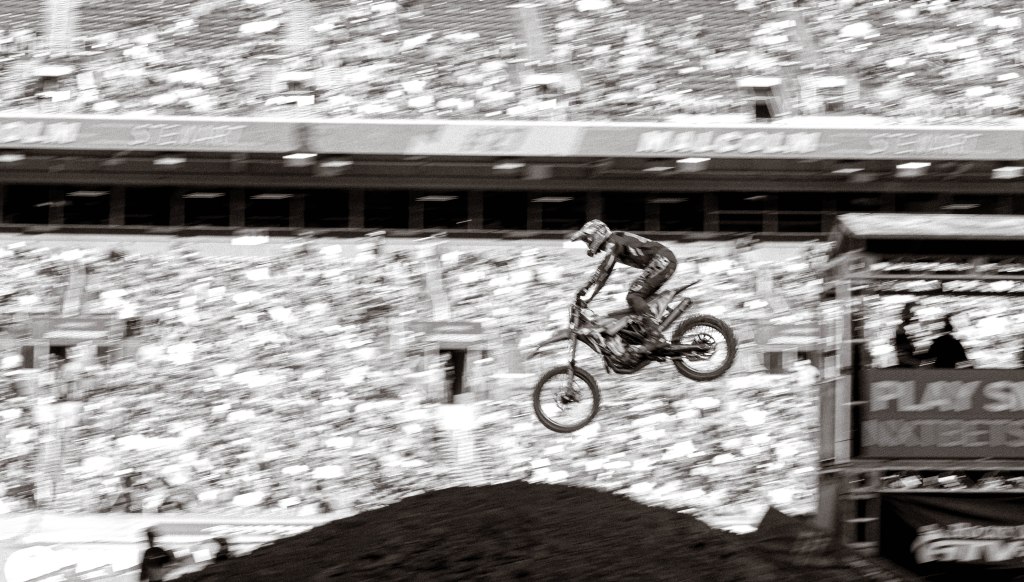
My Experience at Supercross Denver
An Unexpected Lens Choice for Action Sports
Supercross photography is all about speed, chaos, and timing. Most people reach for zoom lenses, but I wanted to test something different. This May, I covered the Denver round of the Monster Energy AMA Supercross Championship, and in a moment of curiosity (and maybe madness), I packed the Canon RF 100mm f/2.8L Macro IS USM as my only lens for the night. — a lens not typically used for action sports photography. Could a prime lens for action sports actually work on a Supercross track? Here’s what I learned.
You can see all my Denver Supercross coverage here.
Why I Chose the Canon RF 100mm for Supercross Photography
I bought the Canon RF 100mm f/2.8L Macro IS USM because I needed something sharper and longer than my RF 85mm f/2. I wanted better subject compression, cleaner separation from the background, and an overall sharper prime for both motorsports, concerts, portraits, and really everything. Anyways.
So when I packed my gear for Supercross Round 16 in Denver, I threw the 100mm in my bag with zero hesitation. I just wanted to see how it handled on the floor — in low light, with unpredictable motion, and chaotic real-world race conditions.
The Canon RF 100mm f/2.8L Macro isn’t what most photographers would call the best lens for Supercross, but I wanted to challenge that.
A Surprisingly Intimate Perspective
What I immediately loved about using the 100mm at Supercross was how intimate it felt. It wasn’t so zoomed in that I lost all context, but it wasn’t too wide either—I could still tell the story of the race while pulling in some really beautiful, close-feeling moments.
That being said, it’s not quite long enough. I found myself cropping most of my images to get the composition I wanted. In Supercross, you’re often not as close to the action as you’d like, and while the 100mm got me a lot closer than a 50mm or 85mm would, it still left me wishing for just a little more reach.
But despite the need to crop, the shots I did get? They felt cinematic. There’s something about the compression and the way this lens handles background blur—it’s gorgeous. It brought a level of softness to the chaos of racing that I really loved.


How the Canon RF 100mm Performed for Supercross Photography
From the moment I got to the track, I realized: this lens wasn’t just capable — it was fun to shoot with.
The 100mm focal length gave me tight, cinematic frames from trackside positions. I focused on the the whoops, rhythm sections, passing zones, and corner exits — anywhere I could get reasonably close and let the lens do its thing.
In exchange, I got stunning detail and that signature L-series color rendering.

Autofocus: A Mixed Bag
This is where I expected the lens to fall short—but it didn’t fall as short as I thought it would. Tracking was reliable, though not perfect. Side-to-side motion was trickier, but that’s where anticipation matters more than gear.
Autofocus was pretty good for me—but only because I figured out how to work with it. I shot with spot focus and did a lot of pre-focusing and shutter dragging. When I prefocused and dragged the shutter, I was actually able to get some sharp, dynamic shots that felt alive.
Sometimes I’d crank up my shutter speed and try to just hold still as riders ripped past me. The lens passed that test, surprisingly. But only some of the times.

What didn’t work? The autofocus can be clunky if you don’t half-shutter first. If you try to fire off a shot immediately—right now, this second—it’ll most likely miss. The lens has this moment where it kind of “thinks” about where it wants to focus, and by then, your subject is gone.
But when I would prefocus on a rider coming toward me, keep half-shutter pressed, track them, and fully press the shutter when they hit the perfect spot—magic. The shots were clean and really satisfying.
Slow vs Fast Shutter: Playing with Motion
One thing I experimented with during the day was shutter speed control — especially using a prime lens with no zoom flexibility.
Slower Shutter Speeds (1/125 – 1/320):
This is where the 100mm really got creative. I leaned into motion blur for shots where the rider was static but the background moved — corner pans, rhythm sections, burnout roosts.

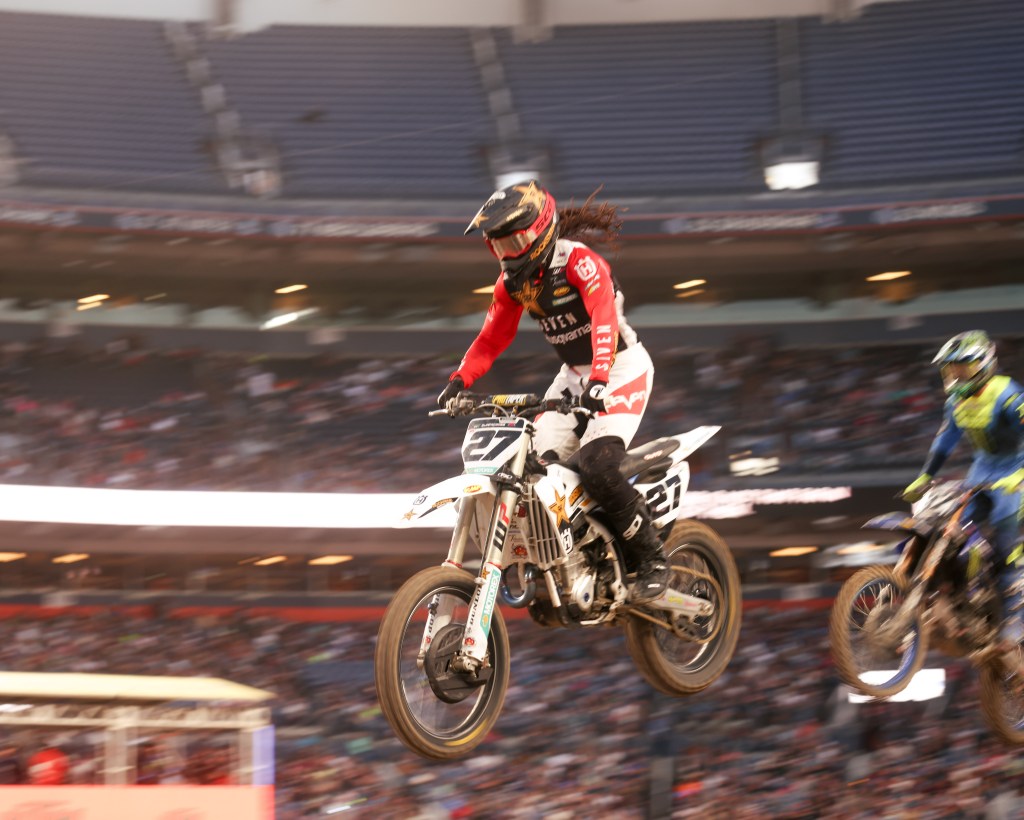

- Let me show the speed of Supercross
- Added energy and chaos to static frames
- Made common angles feel more unique
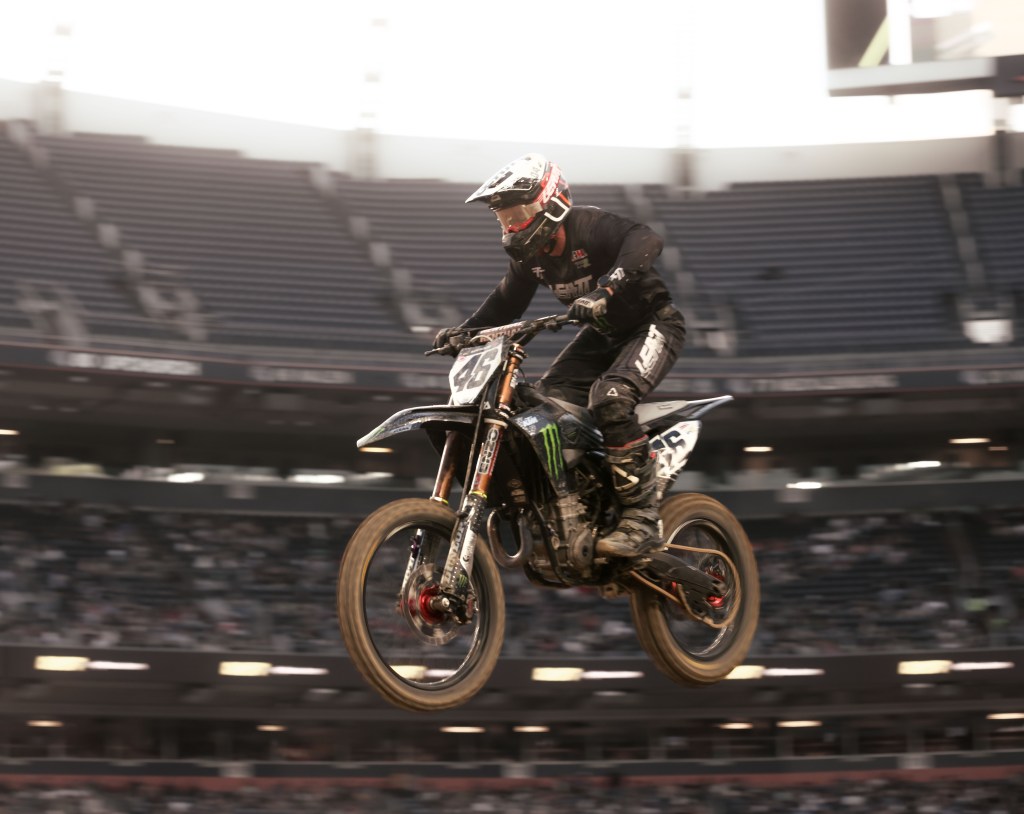
Faster Shutter Speeds (1/1000 – 1/4000):
Where this lens truly shined. The files coming out of the R6 were tack sharp. I could freeze mid-air jump whips, chain tension, even facial expression through visors.


Ergonomics
It’s not a featherweight, but it’s far from a tank. The lens felt balanced and easy to maneuver. It also allowed me to stay mobile around the track without feeling weighed down.
Where It Excelled (and Where It Didn’t)
What Worked:
- Sharpness: Even wide open at f/2.8, the images were crisp and full of detail
- Background separation: Riders popped off the background
- Size: Medium weight, but lighter than other popular supercross lenses
- Creative limitation: Being stuck at 100mm forced me to think like a storyteller, not a spray-and-pray shooter
- Detail-rich action: The lens’s resolving power brought out dirt spray, branding details, and facial expressions beneath helmets.
What I Missed:
- Zoom versatility: No way to quickly reframe wide or tight
- Autofocus speed: Slightly slower, especially in low light or with fast lateral movement
- Reach: 100mm can feel short. On a full-size track, it limited the type of shots I could get. You have to be close to the action or rely on tighter framing.
- Focus Breathing: It’s noticeable, especially when shifting between far and close subjects. Not a dealbreaker but something to keep in mind.
Bonus: Portraits and Handling
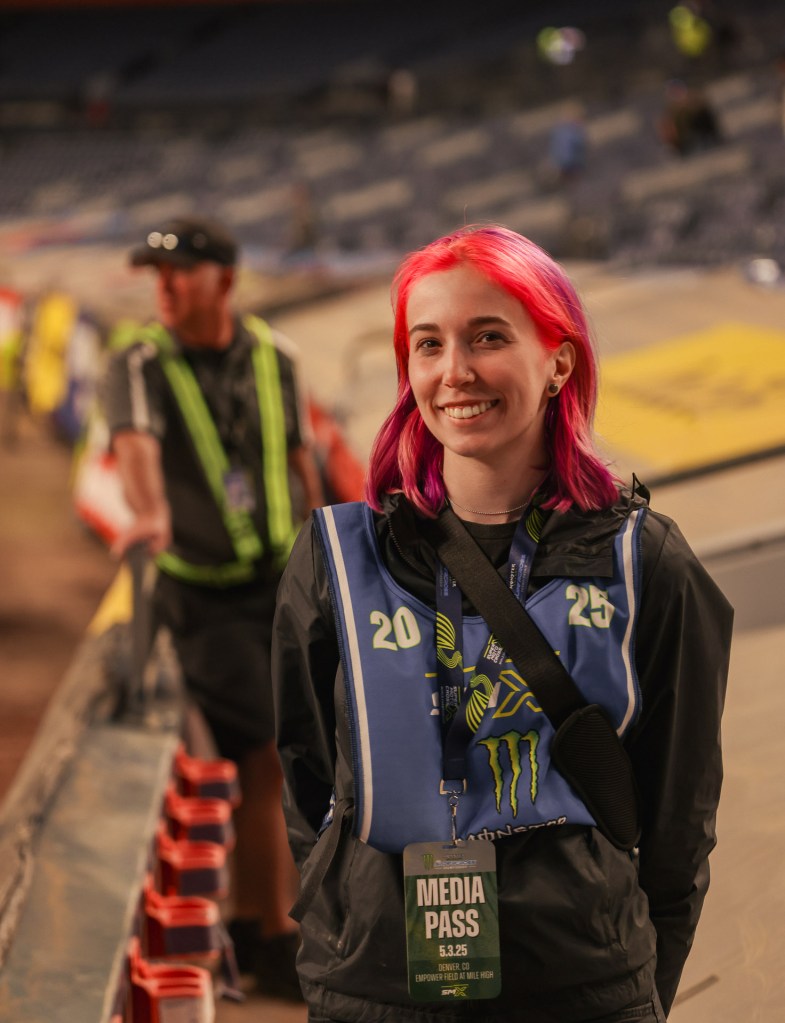
On a side note, a fellow photographer friend I met at the event, Jim from Music Fan Magazine snapped a portrait of myself with the 100mm and it was perfect. The background was creamy and smooth, the separation was beautiful, and it really nailed that pro-level portrait look.

Would I Use a Prime Lens for Supercross Photography Again?
Yes — but as part of a two-lens system.
This lens gave me detail, storytelling, and a cinematic feel that a 70–200mm or 50mm often doesn’t. But for full-race coverage, I’d want the flexibility of a telephoto zoom and the intimacy of this prime.
That said, the RF 100mm is absolutely staying in my race bag. Whether I’m shooting the gate, a pit portrait, or macro details of worn-out gear — this lens adds soul to my coverage.
So would I use this lens again for Supercross?
Absolutely.
But would I recommend it to everyone?
It depends. If you can be precise, patient, and intentional—this lens rewards that. But if you need a setup that’s snappy and can fire immediately without delay, you might get frustrated. It’s not the fastest action lens out there. Or if you’re looking for the versatility of a zoom lens, you obviously won’t get that out of this. If you’re willing to embrace its quirks, this lens rewards you with sharp, story-driven images that stand out. Sometimes, the wrong lens is the right one.
View My 15 Favorite Supercross Photos with the 100mm
View My All of my Denver Supercross Coverage
Gear Used
- Canon EOS R5
- Canon RF 100mm f/2.8L Macro IS USM
- Black Diffusion Mist Cinematic Effect Filter
- Handheld
- Edited in Lightroom
Final Thoughts: Unexpectedly Right for the Job
Would I shoot every Supercross with this lens? Probably not. But would I shoot another one with it? Absolutely.
The Canon RF 100mm f/2.8L Macro forced me to change how I approached a race I’ve covered dozens of times. And that alone made it worth it.
Next time you hit the track — or a concert, or a portrait session — consider breaking the rules. Sometimes the wrong tool is exactly the one you need.
If you enjoyed this behind-the-scenes look at shooting Supercross with a 100mm lens, check out more of my motorsports work and full event coverage below!
Related Reads:
Supercross Media Day: Behind the Scenes Access
View My Motorsports Photography Portfolio



 KRx Media
5 responses to “What It’s Like to Shoot Supercross with the Canon RF 100mm f/2.8L Macro (Prime Lens for Action?)”
[…] Shooting Supercross with a 100mm Lens – Can a Prime Keep Up? […]
LikeLike
I loved learning the ins and outs of how you decided to shoot this race. Your extensive knowledge, experience and adaptability really shined through. It just goes to show and brilliant of a photographer you truly are! The images you captured are remarkable.
LikeLiked by 1 person
[…] More posts you might like:• The Ultimate Supercross Photography Checklist• Best Camera Settings for Dirt Bike Photography• What It’s Like to Shoot Supercross with the Canon RF 100mm f/2.8L Macro […]
LikeLike
So interesting. I love how you thought outside the box regarding the lens, how the macro isn’t a racing lens but something yoy thought of trying because it was fun. It’s things and thought processes like that that help you stand out from time to time, and I like to think this is one of those times! I see what you were getting at with the fast paced and chaotic nature of the races with the background blur but the sharpness and clarity of the rider. It reminds me of taking a picture of a Nascar race. You know how they go unbelievably fast? Taking pictures of the riders reminds me catching the cars in perfect clarity but recognizing and adding in their speed via blur.
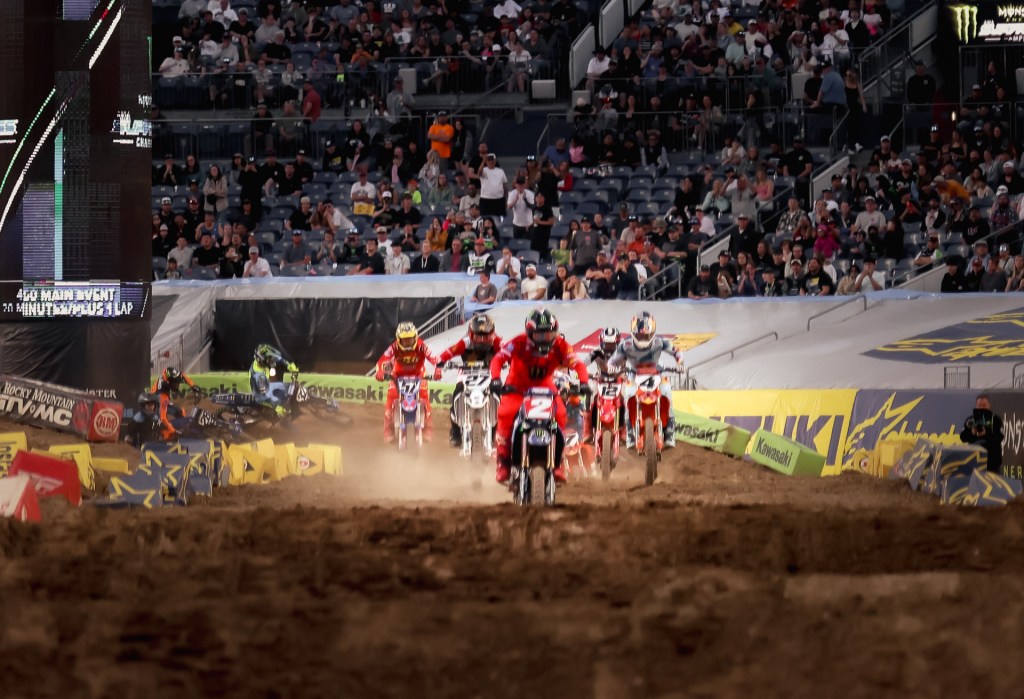
I think my favorite pic from this is right before the “Slow vs Fast…” sub section. That picture of the racers barreling down the track coming towards you is so fucking cool, like unbelievably cool I cannot believe yoy got a shot like that. To have the racers look like they’re about to run you down but you managed to take a clear Pic before jumping out the way is fantastic.
As well, love how you used the lens and how you gave pros and cons to it. It’s not a vital lens to use for things like this, but what you get out of it is nuts if you’re patient and such like you mentioned. Awesome!
LikeLike
[…] Best Zoom Lenses for the Canon R5 […]
LikeLike