
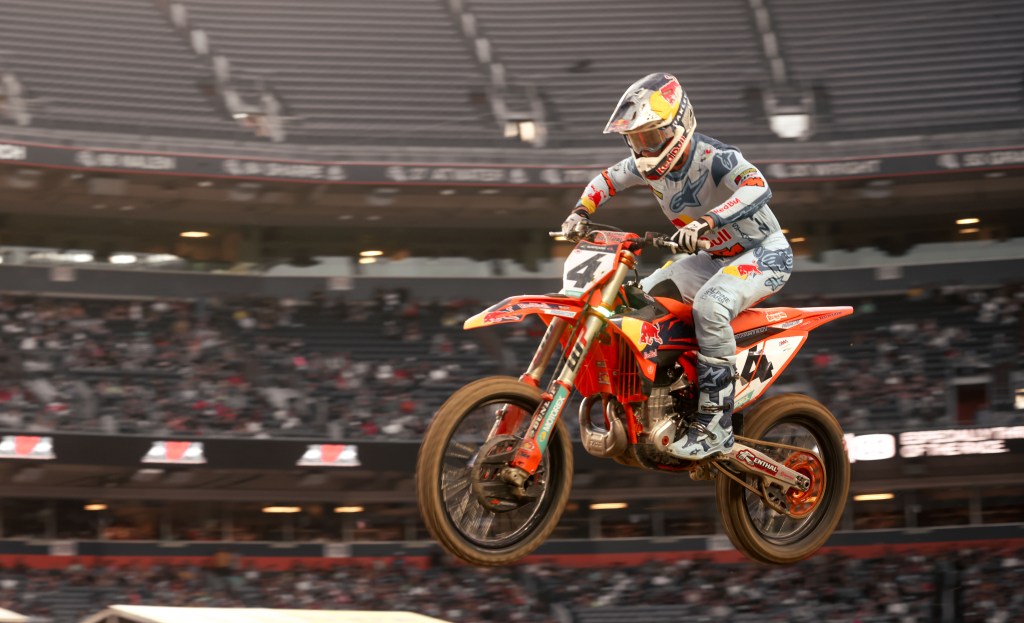
My Denver Supercross Race Day Prep Guide
Supercross isn’t your average photoshoot. It’s loud. It’s fast. It’s unpredictable. And that’s exactly why I love photographing it.
With Monster Energy AMA Supercross coming to Denver, Colorado just around the corner, I’m gearing up for another exciting day trackside. Shooting motocross isn’t like covering a traditional sporting event—conditions change quickly, dirt flies everywhere, and the action is fast-paced. As a credentialed photographer for this race, preparation is everything. There’s no pausing the action or asking riders to hit that jump again—if you miss it, it’s gone.
Here’s my tried-and-true checklist for Supercross race day—packed with everything I bring, wear, carry, and prep so I’m not caught off guard by flying dirt, dying batteries, or unexpected weather.
Check out my Denver Supercross 2025 hub, here!
Pre-Race Planning: What I Do Before the Gate Drops
Before I even pack my camera bag, I spend time planning how I’ll approach the event. Here’s what my pre-race prep looks like:
+ Have Media Credentials and Know Your Access Level
Make sure you have proper media access through the organizer or sponsor (in my case, Monster Energy and Feld Motorsports).
My credential determines where I’m allowed to stand. Sometimes I can get close to the action (with strict safety rules), and sometimes I’m limited to designated areas. I plan my shooting strategy based on the access level I will be given. You usually find this out the day before during media day.
+ Study the Track Layout
Every track has its own signature rhythm sections, jumps, and berms. I check maps to know where the drama will unfold. Know the layout. Where’s the start gate, where are the best jumps, the berms, the pit area? Walk the track if possible. Know the track like the back of your hand.
+ Check the Weather (And Then Check it Again)
Rain or shine, dust or fog—you need to be ready. Supercross is unpredictable, and so is the weather. I prep for sun, dust, or downpours. Pack a poncho, lens cloths, and a rain cover for your camera bag and gear.
+ Review Past Races
I’ve watched enough Supercross to anticipate where the best action happens, but if you’re new—review previous rounds. Who tends to get the holeshot? Where do the biggest battles happen? Understanding the race dynamics in advance gives me an edge. I personally skip this step since I watch every race, but if you’re new to Supercross, take time to learn how the series works, how the races are structured, and which riders compete in which class—it’ll help you anticipate key moments.
+ Attend Safety Meetings
If you’re credentialed, you’ll need to attend the pre-race safety meeting. This is where you’ll get details on media zones, track boundaries, and press timelines. This is also where you will receive your track access level, media bibs, and press credential pass.
Camera Gear Checklist
Here’s everything I bring to the track and why:
+ Camera Body: Canon R5 (or whatever you’ve got—just know how to use it fast and well)
+ Lenses:
- 100mm (tight action shots)
- 50mm (portraits, walk-around)
- 35mm (wide angle, crowd and pit context shots)
Wish list: If I had it, I’d bring a 70-200mm—covering a range is crucial. If you have one, bring it! It is the workhorse of supercross photography.
+ Gear:
- Extra batteries – Bring more than you think you’ll need, I bring AT LEAST 3 batteries for all day events
- Extra SD cards – Dual slot = double backups
- Filters – UV or ND depending on lighting. If you’re shooting outdoor, it might be bright.
- Lens blower & wipes – Dust is everywhere, you’re going to need a quick way to clean it off.
- Camera clip, dual strap, or a bag – Don’t carry your camera in your hands all day. I use a combination of a neck strap and beetle clip for quick access.
- Monopod – Helps maintain stability during those lower shutter speed shots.
- Rain covers – Weather will always be unpredictable. It’s best to prepare for the rain that never comes than to be caught off guard.
- External battery pack(s) – To charge your phone, action camera, or main camera if your set up allows. You’re going to be there ALL DAY and you don’t want to miss anything due to dead batteries. (Been there, done that.)
Action Camera / BTS Gear
Behind the scenes content is valuable—clients love it, and it’s fun to share your experience online.
- GoPro or action cam – Chest-mounted, camera mounted, or clipped to your backpack.
- Mounts – Something like a cold shoe mount to your camera
- Extra batteries + SD cards – Just like your main camera, action cams die fast and fill up even faster.
- Extra SD cards – Nothing worse than running out of space
- Charging cables + portable battery pack – If you’re shooting all day, prep to recharge on the go.
Personal Supplies & What to Wear
Personal Supplies
- Ear protection – these bikes are LOUD & and the fans can be louder
- Refillable water bottle or hydration pack – You will be outdoors most of the full day. Stay hydrated.
- Sunscreen & Lip Balm – Trust me. You’ll thank me later.
- Snacks – Seriously, pack more than you think you’ll need. (I chose these)
What to Wear
- All black, logo-less clothing – You’ll want to look professional and try not to stand out. Stay within the following guidelines outlined by Feld Motorsports:
- No inappropriate or indecent logos
- No sleeveless shirts
- No crop tops
- No ripped or frayed clothing
- No tight, reveling or inappropriate clothing
- Media bibs – Media bibs will be provided to you at the safety meeting
- Press Credentials – You’ll want to keep your press credentials on you and visible at all times.
- Comfortable, rugged, all terrain shoes – You will be walking. A lot. And in a lot of different types of terrains. Consider wearing a pair of comfortable hiking shoes or similar styled shoes if you plan to be on the track or on the field at any point.
- Sun hat, sunglasses – It will most likely be sunny and bright. Unless you’re photographing a mud race. (oof) So bring things to keep the sun off of your face and out of your eyes. I will be bringing one of these.
Race Day Strategy: How I Shoot Supercross
+ Stay Aware
Never, and I mean EVER turn your back to the track. Riders come from all directions—fast. Respect the rules, the marshals, and the race. Stay vigilant. Obey the safety rules. Be smart. Supercross races can be very dangerous for those in the wrong place at the wrong time. Be aware and stay cautious.
+ Make a Photography Plan
What shots do you want to get? Make a list! Refer to it when you feel like you’ve run out of things to photograph. Things like – Holeshot pictures, podium shots, and pics of the riders interacting with the crowds. There are a million things to capture, make a mental or physical note of your dream shots before getting to the race.
+ Move with Purpose
Start near the start gate, then move to corners (for roost) and jumps (for drama). Don’t camp in one spot—change locations with the race flow. Try to mix up your shoots to stay interesting. Get photos of a rider in the whoops, someone going off of a jump face, two racers racing it out for the lead. Having a list of photos you hope to take can really help you out here.
+ Shoot the Pits
Some of the best moments happen behind the scenes and in the pits—riders prepping, pre-race rituals, candid moments, mechanics wrenching, team dynamics unfolding. This is where real storytelling lives.
+ Watch the Light
Take note of the sun and shadows as the day goes on. The lighting can change drastically from the start of practice to the main event. If it’s outdoors, golden hour will hit right around the evening motos—use it! Even at indoor events, the light shifts with pyro, spotlights, and LED displays. Adjust your white balance and exposure settings accordingly. I shoot manual to keep things consistent and dialed in.
+ Shoot Tight, Wide, and Everything in Between
It’s easy to get caught up shooting long lens action shots all day, but don’t forget the context. Use a wider lens sometimes to capture the scale of the stadium or the craziness of the crowd. Then get tight for emotion: the eyes through the goggles, the clutch lever being pulled, the dirt flying off a rear tire. Tell the full story through a range of focal lengths.
+ Know the Riders and the Schedule
Do a little prep beforehand—know who the top contenders are, what numbers they run, and when key events like practice, qualifying, and opening ceremonies happen. This helps you anticipate where the action is and when to be ready. You’ll also be quicker to identify photo-worthy moments in the pits and on track.
+ Have Your Settings Dialed Before the Gate Drops
Supercross is fast. There’s no time to fumble with settings once the gate drops. I preset my shutter speed to at least 1/1600 for action, keep my aperture wide for separation, and ISO wherever it needs to be depending on light. Shoot in bursts, but don’t just spray and pray—time your shots with rhythm sections and corners to maximize impact.
+ Don’t Forget the Emotion
Celebrations, disappointments, exhaustion, joy. These are the money shots that tell the story beyond the race results. Stay alert after a big pass, after the checkered flag, or during interviews. Sometimes the best image is when the rider finally pulls off their helmet and lets out that post-race breath.
Settings I Usually Start With
I know everyone wants to know what settings should I use?! So here’s what I usually start with when I’m shooting Supercross. These aren’t rules—but they’re a great jumping-off point, especially if you’re new or just want a solid baseline before making adjustments.
- Shutter Speed:
I start around 1/1600 to 1/6400. The higher the better if you want to freeze flying dirt and mid-air tricks. The only time I go slower is if I’m trying something creative, like motion blur (and even then, it’s rare during a race!). - Aperture:
Usually between f/2.8 and f/4.0. I want that dreamy background blur but enough depth to keep the whole rider sharp. I’ll go up to f/5.6 or f/8 if I’m shooting from far away and need more of the scene in focus. - ISO:
Totally depends on lighting. On a sunny day, I can be around ISO 400. Indoors or night racing? I don’t hesitate to push it to ISO 3200 or even 6400—the Canon R5 handles it like a champ. - Autofocus Mode:
I use Servo AF with Expand AF Area or Spot AF. I don’t rely on subject tracking for this—just keep the AF point on the rider, especially during jumps or tight turns. - Drive Mode:
High-speed continuous all the way. I’m usually firing at 20 fps with the electronic shutter, because let’s be real: you only need one perfect frame, but you won’t get it without options. - White Balance:
I’ll lock it to Daylight or Cloudy for consistency if I like the tones I’m getting. But you might have to play around with this setting. - Metering Mode:
Usually Evaluative, but if I’m zoomed in tight or shooting into bright lights, I’ll switch to Center-weighted to avoid weird exposure shifts.
My Favorite Techniques
+ Anticipate the Action
If I know where riders scrub, whip, or launch, I can position myself for the moment before it happens. Set up in the whoops section, get your settings just right, have the focus locked in and ready for the rider to come around the corner, and wait for just the right moment to freeze in time forever. Did ya get it?
+ Panning for Motion Blur
I slow my shutter speed down (1/100s or so), track the rider, and pan my camera in a sweeping motion to create dynamic motion blur while keeping the subject sharp. Photos like these can show speed, emotion, and tell the story in a different, more unique way.
+ Freeze It Mid-Air
For big-air shots, I crank shutter speeds up to 1/1000s or faster to freeze the dirt and rider cleanly. I love the look of a rider seemingly hundreds of feet above the ground frozen in time and place. What an experience it is to get to be standing right there. I live for these shots.
+ Use the Environment
I love finding leading lines, stadium lights, or fences that naturally frame the subject and add depth to my images. Try setting the subject up in front of the crowds or between the fire canons for some unique pictures.
Fun Fact:
The average Supercross rider hits the whoops at around 30–40 mph—and some photographers stand just feet away from the action. That’s why track awareness (and a fast shutter finger) is essential.
Final Thoughts
Every Supercross race has its own rhythm—but preparation always gives me the edge. From knowing the layout and weather to dialing in my gear and safety measures, it all adds up to being ready when the action explodes.
I’ll be posting coverage from the Denver round soon both here and on my Moto Instagram—follow along, and if you’ve got any Supercross photography tips or questions, drop them in the comments. Let’s talk dirt, speed, and getting the shot.
And hey, if you’re like me and end up covered in dust by the end of the day? You probably did something right.
 KRx Media
6 responses to “Dirt, Drama, and Dead Batteries: The Ultimate Supercross Photography Checklist”
[…] Dirt, Drama, and Dead Batteries: The Ultimate Supercross Photography Checklist […]
LikeLike
[…] posts you might like:• The Ultimate Supercross Photography Checklist• Best Camera Settings for Dirt Bike Photography• What It’s Like to Shoot Supercross with the […]
LikeLike
[…] Dirt, Drama, and Dead Batteries: The Ultimate Supercross Photography Checklist […]
LikeLike
[…] The Ultimate Supercross Photography Checklist: Dirt, Drama, and Dead Batteries […]
LikeLike
[…] Dirt, Drama, and Dead Batteries: The Ultimate Supercross Photography Checklist […]
LikeLike
[…] Dirt, Drama, and Dead Batteries: The Ultimate Supercross Photography Checklist […]
LikeLike