
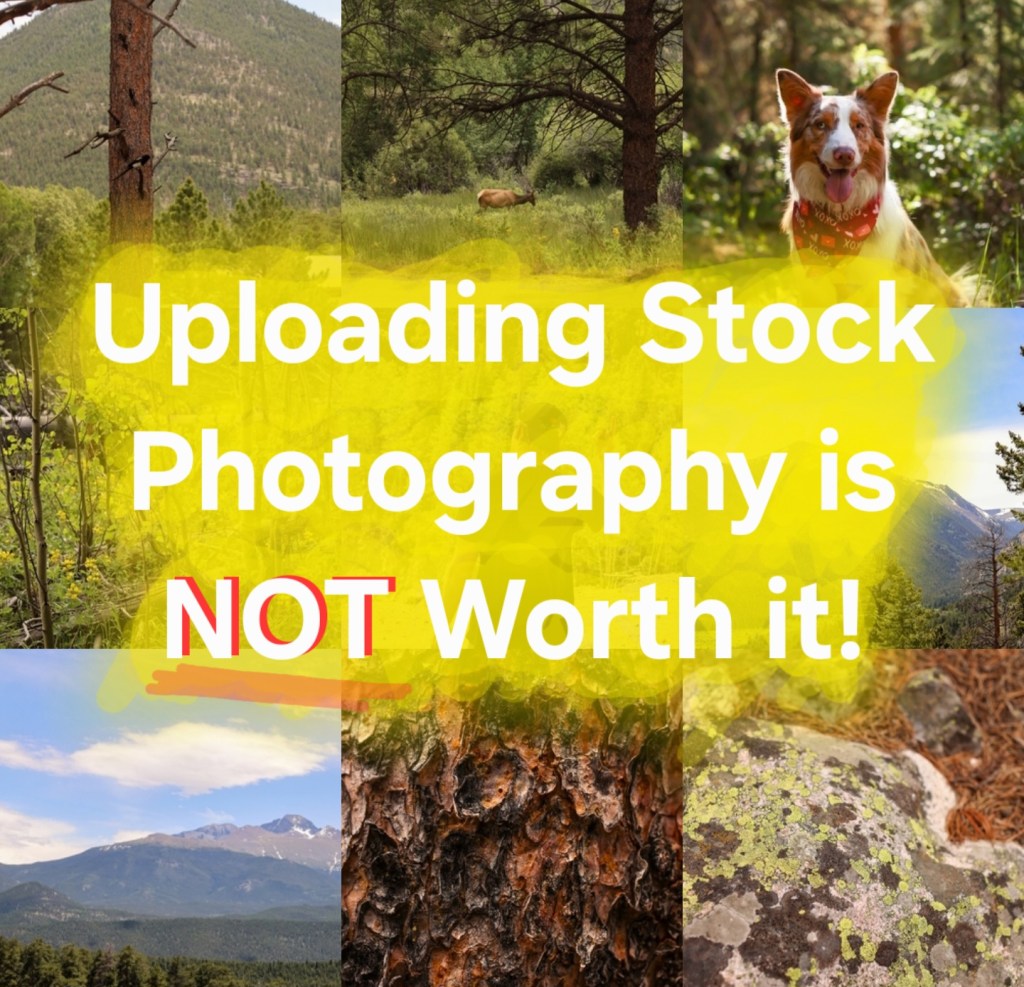
Can you make money with stock photography? How much do photographers make?
Is stock photography worth it in 2026?
Stock photography is often pitched as an easy way to make passive income. Just upload your old photos, sit back, and watch the money roll in. Sounds great, right? I’ve even encouraged photographers to start uploading stock today because, let’s be honest, most of us have thousands of images collecting digital dust on hard drives. Why not put them to work instead of letting them rot in storage?
But let’s take a step back and look at the bigger picture. What if stock photography isn’t the effortless goldmine it’s made out to be? What if, instead of a steady stream of income, it’s just another frustrating hustle with minimal payoff? If you’re thinking about diving into the world of stock photography, here are a few reasons why it might not be the right fit for you.
1. How Much Does Stock Photography Pay? (Often Just Pennies)
Sure, stock photography has the potential to earn passive income, but let’s be real; most stock images sell for pennies. Agencies like Shutterstock and Adobe Stock might pay as little as 10 cents per download, and sites like Getty Images can pay even less. Even with thousands of images, it can take a long time to see a meaningful payout. Many photographers find themselves disappointed when they realize they’ve made just a few dollars after months of effort. And reasonably so. I was pretty frustrated after about 6 months in. 10 cents here, 25 cents there, I thought I was going to be rich off of my 500 image portfolio, and that just was not the case.
How Many Photos I Uploaded Before My First Sale on Shutterstock
If many stock sites pay as little as $0.10 per image sale, let’s do some quick maths (quick maffs, one might say)—if every single image you upload sells once, you’d need 1,000 images just to make $100. But in reality, not every image sells. Some might never sell at all. So, to realistically make $100, you might need 2,000, 3,000, or even 4,000+ images in your portfolio depending on quality, niche, and the world’s need for the photos you’re offering.
Now, imagine you want to turn this into a steady income. If you’re aiming to make even a modest $500 per month from stock, you’d need a massive portfolio—likely 5,000-20,000+ images, if not more. And that doesn’t happen overnight. It takes months, if not years, of consistently shooting, editing, and uploading to get there. If you’re not willing to put in that kind of long-term effort, stock photography might not be worth your time.
2. How Long Does It Take to Make Money With Stock Photography?
Uploading a handful of images and expecting consistent income is wishful thinking. That just isn’t how it works. Stock photography isn’t a “get rich quick” situation; it’s a long game. A really long game. The most successful stock photographers have massive libraries of well-curated, in-demand content. Getting to that level takes time—time spent shooting, editing, keywording, and uploading. If you’re not willing to commit to that, stock photography might just become another one of your abandoned side hustles. (Just add it to the list haha)
Each image requires thoughtful keywording and descriptions to even have a chance at being found among millions of others. This isn’t a quick process. Some photographers spend hours just managing metadata and ensuring their photos are optimized for search visibility. And even after all that effort, there’s no guarantee your images will actually sell. It’s a long-term game, and if you’re not patient or committed, you may never see significant returns.
Even if you’re pushing yourself to the absolute max, some stock sites limit you to 500 uploads per week. If you’re hitting that cap every single week, you could reach 20,000+ images in just one year. But let’s be real, most stock photographers aren’t uploading 500 images a week.
Many photographers upload somewhere between 25 to 100 images per week. At just 25 images a week, it could take 5, 10, or even 20 years to build a portfolio big enough to generate meaningful income. Even if you bump that up to 100 images per week, you’re still looking at 2 to 4 years before you have a solid, income-generating portfolio. And if you’re inconsistent with your uploads? It’ll take even longer.
How many images will I have in my portfolio in 2 to 20 years?
Here’s how many total images you’d have based on different weekly upload rates over 1, 2, 3, 5, 10, and 20 years:
| Weekly Uploads | 1 Year | 2 Years | 3 Years | 5 Years | 10 Years | 20 Years |
|---|---|---|---|---|---|---|
| 25 | 1,300 | 2,600 | 3,900 | 6,500 | 13k | 26k |
| 50 | 2,600 | 5,200 | 7,800 | 13,000 | 26k | 52k |
| 100 | 5,200 | 10,400 | 15,600 | 26,000 | 52k | 104k |
| 200 | 10,400 | 20,800 | 31,200 | 52,000 | 104k | 208k |
| 300 | 15,600 | 31,200 | 46,800 | 78,000 | 156k | 312k |
| 400 | 20,800 | 41,600 | 62,400 | 104,000 | 208k | 416k |
| 500 | 26,000 | 52,000 | 78,000 | 130,000 | 260k | 520k |
If you’re not willing to commit 2 to 20+ years to steadily growing your portfolio, stock photography might not be the best use of your time.
Want to know how to keyword your photos to get the most visibility? Check out my guide on How to Keyword Your Stock Photos: Simple Tips to Boost Discoverability
3. Why Stock Photography Images Get Rejected
Stock agencies have strict guidelines, and these rules can be frustrating, especially for those new to the stock photo game. Blurry images, too much noise, improper lighting, low resolution, or even photos without proper model releases can be rejected. You might spend hours curating and uploading only to have half your submissions declined.
So, imagine this: you spend hours out in the field, shooting what you think are great images. You might have found the perfect subject, angle, and composition. You come home, edit your images, and start the keywording process—all that work, all that effort. But then, you get the dreaded rejection notification.
It’s disheartening, right? That shot you were so proud of didn’t make the cut because it wasn’t sharp enough, had a little too much noise, didn’t meet the resolution standards, or they “already have enough similar photos on their site” </3. And this isn’t a one-time thing. You may find yourself in a cycle of spending time selecting, shooting, editing, and uploading, only for your images to be rejected because they didn’t meet the technical guidelines. It can feel like a constant uphill battle, and this rejection process adds significant time to what should be a relatively simple task.
If you’re hoping to build up a portfolio of 5,000+ images to start making a decent income, consider this: If half of your images are being rejected, that number suddenly doubles. Instead of having a straightforward path to a substantial portfolio, you’re forced to constantly revisit rejected images. The timeline for hitting 5,000+ images grows longer, which means your potential earnings and passive income flow are delayed.
If you don’t think a majority of your photos are good enough to be accepted of you’re not willing to face rejections, stock photography might not be for you.
4. Is Stock Photography Oversaturated? Yes, and Here’s Why
One of the biggest challenges of stock photography is the sheer volume of competition you’re up against. Stock libraries contain millions of images from photographers all over the world, and that means the market is crowded with photos of nearly every subject imaginable. It can be difficult to make your photos stand out against the fierce competition.
If you’re shooting common subjects, like picturesque sunsets, pretty flowers, fluffy clouds, or generic wildlife photos, you’re not alone. Tens of thousands of similar images already exist in these categories. So, what happens when you upload your photo? It’s often drowned in a sea of similar shots, making it nearly impossible to get noticed, or even worse, your photo doesn’t get accepted for being “too similar” in an overcrowded niche. “Man… I really thought this cloud picture was going to make me a millionaire. :(“
Think about how saturated popular stock photography categories are. When someone searches for “stunning sunset,” they’re going to be bombarded with hundreds of nearly identical images, each with slight variations. In a scenario like this, unless you have something uniquely different, whether that’s a creative angle, lighting, subject matter, or style, your photo will likely go unnoticed or unaccepted. Even if you spent time perfecting your shot, there’s a good chance it will be overlooked or declined because it’s simply too similar to the thousands of other sunset photos already available.
This leads to a harsh reality for many stock photographers: the photos that have the potential to sell the most are often the ones that cater to very specific or niche markets. Say you really enjoy taking breath taking nature photos, with excellent keywording, your photos MIGHT stand out and sell, but will they? Instead, let’s say you take a photo a “woman laughing with a salad,” “business meeting working from home,” or “healthy meal prepped dinner for two,” those things will probably sell like hot cakes. So if you upload photos you enjoy taking, you might not get as many sales as you were hoping for, even if the images are astounding. Instead, if you take photos high in demand or are trending topics, you have higher chances of getting sales. If you’re just shooting what’s easy or popular, like the “typical” nature shots or beautiful sunsets, there’s a chance your photos might never find their buyers. Without carving out a niche, your work risks blending into the sea of stock images, making it significantly harder to stand out.
If you’re not okay with uploading images that might not sell, or with the idea that you could spend hours shooting, editing, and uploading only to see little return on your effort, then stock photography might not be the best fit for you. It’s essential to understand the competitive nature of the industry and how important it is to create images that stand out, cater to niche audiences, or fulfill a very specific need. Without that, the process of getting your images noticed becomes a long and often frustrating journey.
Market Oversaturation: How to Find Your Place in a Crowded Market
One way to understand just how competitive stock photography is? Try this simple test:
- Go to Shutterstock (or any stock site).
- Type in subjects you like taking photos of and see how many images already exist.
- Then, type in subjects that buyers might actually need but have fewer results and compare.
Chances are, the photos you enjoy shooting fall into oversaturated categories—where you’re competing against millions of existing images. On the other hand, more specific, niche subjects tend to have far fewer results, meaning a higher chance of your photos standing out.
Here’s what that looks like in real numbers:
(When I looked these up in December 2025)
Common & Oversaturated Subjects
These subjects have millions of search results, meaning your photo would be buried under thousands of similar images.
| Search Term | Stock Library Results |
|---|---|
| Sunset | 16 million |
| Landscape | 67 million |
| Wildlife | 18 million |
| Dog | 6 million |
| Coffee Cup | 5 million |
| Mountain View | 13 million |
| Clouds | 25 million |
| Business Meeting | 4 million |
| Work From Home | 4 million |
Niche & Less Competitive Subjects
These subjects have far fewer search results, which means buyers are more likely to find—and purchase—your photo.
| Search Term | Stock Library Results |
|---|---|
| Women Empowerment | 69k |
| Women in STEM | 29k |
| Meal Prep Dinner | 24k |
| Dirt Bike Wheelie | 550 |
| Colorado Desert | 113k |
| Australian Shepherd (Like Remy) | 70k |
| Chili Cheese Fries (mmm) | 27k |
| Obese Dog | 4k |
| Dying Grass | 25k |
Looking at these numbers, it’s easy to see why so many stock photographers struggle with sales. If you’re uploading photos of sunsets or landscapes, you’re competing against millions of other images. But if you find a niche—like meal prep photography, women in STEM, or even something as oddly specific as obese dogs (lol idk)—you have a much better chance of standing out.
So, before diving into stock photography, ask yourself: Are you okay with uploading images that may never sell? Or are you willing to take photos outside of what you’re wanting to take photos of? If not, stock photography might not be for you.
5. Losing Control of How Your Stock Photos Are Used
When you sell through stock agencies, you don’t control who buys your images or how the photos are used. Your photo could end up in an advertisement for something you don’t support, and there’s not much you can do about it.
For example, a simple lifestyle shot could be used in a political ad, or an image of a person might appear in a controversial context. While most agencies require buyers to adhere to ethical usage guidelines, you ultimately have no say in where your work appears.
You might upload a cute, wholesome picture of yourself running through a wheat field at golden hour, only to later find it being used in a medicine commercial for erectile dysfunction. Fun!
I’ve personally found photos of Remy advertising all kinds of things I never signed up for—
+ A vet clinic promoting vaccinations (he hates shots)
+ An electric fence for dogs (he’s never been near one)
+ A doggy daycare in another country (he’s never left my side)
+ An article titled “Worst Dog Breeds to Own” (excuse me??)
And then there’s the time I sold what I thought was a cute self-portrait, only to later find it used in an article about… having buck teeth. So that was a fun surprise. :B
The reality is, once you sell a photo, you lose control. It could be placed in a negative context, used to promote something you don’t support, or even appear in an article that completely misrepresents the subject. If you’re protective of your images and want to maintain control over their distribution, stock photography may not be the best fit for you.
Is Stock Photography Worth It?
So, is stock photography worth it?
The honest answer: it depends on your expectations and your commitment.
Stock photography can be worth it if you treat it like a long-term strategy, not a quick cash grab. Photographers who consistently upload hundreds (or thousands) of images, target in-demand niches, and take keywording seriously can build a portfolio that generates passive income over time. It’s slow, but it can work.
However, stock photography is not worth it for most people who:
- Expect fast or reliable income
- Upload a few hundred images and stop
- Only shoot what they personally enjoy
- Don’t want to spend time keywording, researching trends, or managing rejections
If you’re hoping stock photography will replace a full-time income anytime soon, it will likely lead to frustration. The pay per download is low, competition is intense, and success often takes years of consistent effort before results feel meaningful.
That said, if you already have a large archive of commercially usable images, enjoy shooting for concepts instead of art, and are willing to play the long game, stock photography can be a worthwhile side hustle. Just go in with realistic expectations, a clear strategy, and the understanding that most of the work happens long before the money shows up.
Stock photography isn’t a scam—but it’s also not magic.
For the right photographer, it’s a slow-burn investment. For everyone else, their time may be better spent elsewhere.
Final Thoughts
Stock photography can be a fantastic long-term side hustle, but it’s not an instant payday. If you’re patient, strategic, and willing to put in the work, it can be a decent source of passive income. You have to be in it for the long haul: consistently uploading, refining your portfolio, and adapting to market demand. But there’s also the reality: you might spend hours shooting, keywording, and uploading, only to see your images rejected or sell for pennies.
If you’re expecting to strike it big with 100 uploads over a year, stock photography probably isn’t for you. Success in this space takes patience, persistence, and a willingness to put in the work for years before seeing real results. If that sounds like something you’re ready for, then go all in. If not, your time might be better spent elsewhere. Here’s How Many Photos I Uploaded Before My First Sale on Shutterstock.
That said, if you’re still on the fence, check out my post Why You SHOULD Start Uploading to Stock Today to see the other side of the argument. Maybe stock photography is right for you—maybe it isn’t. But at least now, you’ve got both sides of the story.
Want to Learn More about Stock Photography?
- Optimal Daily Photo Uploads on Shutterstock: How Many Images Should You Submit? – Learn the optimal number of photos to upload for maximum exposure.
- How to Keyword Your Photos: Simple Tips to Boost Discoverability – Struggling to get your photos noticed? This guide will help.
- How Many Photos I Uploaded Before My First Sale on Shutterstock – Curious about my journey? Here’s how long it took to land my first sale.
- Maximizing Your Stock Photography Portfolio: How Many Photos Do You Really Need? – Find out the ideal number of images for stock success.
- Turn Smartphone Photos into Cash: A Beginner’s Guide to Stock Photography – Think you need a pro camera? Think again! Start selling smartphone shots today.
Anyways, thanks for reading! I hope I helped teach you why uploading to stock photography might not be for you. Want to find out why uploading to stock photography might BE for you? Read here! Hesitant to start your stock photography journey? Anything you’re confused about in the Stock Photography world? Drop a comment below!
Thanks guys!! See ya next time!
Read another random post by clicking here!




 KRx Media
7 responses to “Is Stock Photography Worth it in 2026? The Honest Truth”
I’m sorry but reading about where your photo’s ended up is so funny, especially the buck teeth one what the hell lol. With that in mind, I’m suing whoever wrote that “Worst Dogs to Own” article for defamation.
What’ve I’ve learned from these stock blog posts is how much patience you have and how much you have to REALLY love taking pictures. I’m not lumping a passion for photography with a passion for stock photography, but it’s really apparent how competitive you have to be with it. How specific or how much your photo’s need to stand out. What’s crazy is that I found some AI images lumped in with actual photos and that was so stupid. Is it a market? Sure, but not a very good one. Aside from that, I personally think stock photography is just an incredibly passive thing you can do. Like, if you just upload photos, use all the buzzwords and post appropriately every now and then, instead of trying your hardest to make it the big bucks through it, it’ll be an easier side hustle. Like if I take 500 or more photos and upload them mid way through the year or maybe towards the end, maybe I’ll feel like I’m having a better time I dunno.
It’s not a bad side hustle, but I don’t think it’d work for me personally. Probably just use the site as extra storage if anything lmao.
LikeLike
[…] Why Stock Photography Might Not Be for You […]
LikeLike
[…] Why Stock Photography Might Not Be for You […]
LikeLike
[…] Why Uploading Stock Photography Might Not Be for You […]
LikeLike
[…] Is Uploading Stock Photography Worth it? This post was all about the pros, click here to learn about the cons! […]
LikeLike
[…] on Shutterstock?! I wondered how many photos I’d need to upload, how much money I’d make, and if stock photography was really worth it. If you’re asking the same questions, you’re in the right […]
LikeLike
[…] Is Stock Photography Worth it in 2026? The Honest Truth […]
LikeLike