

How Photographing My Dog Helped Me Learn Camera Settings
Photographing my dog Remy is how I learned some of the most important photography skills I use today; from capturing movement to understanding light, patience, and emotion.
If you’re new to photography or interested in pet photography, dogs are one of the best teachers you can have. They don’t pose perfectly, they move fast, and they force you to adapt quickly. In this post, I’m sharing the real photography lessons I learned by photographing my Australian Shepherd, Remy, and how those lessons can help you improve your own photography.
If you’ve followed my photography journey for a while, you know that Remy, my almost-4-year-old Australian Shepherd, is not just my best adventure buddy, he’s also my favorite subject to photograph. What started as me simply wanting to practice my camera settings turned into something so much more. I’ve ended up capturing moments with him that I’ll cherish forever. The way he jumps with so much power to catch a frisbee, the quiet moments of rest between play sessions when he just wants to be by my side, or the way his eyes light up before he jumps in the lake. In so many ways, Remy has been my best teacher, without even realizing it.
My Top 10 Favorite Photos of Remy: Capturing My Best Boy
How Photographing a Dog Teaches You to Capture Motion
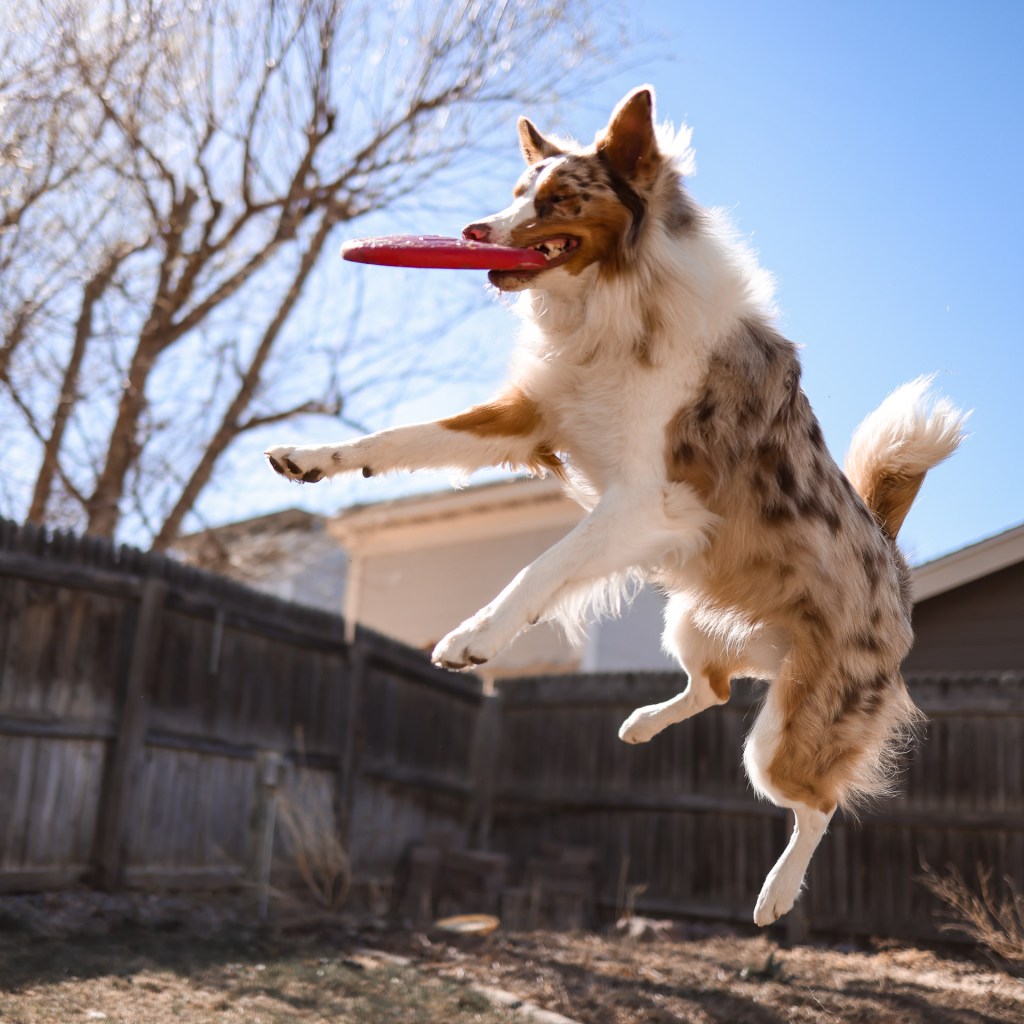
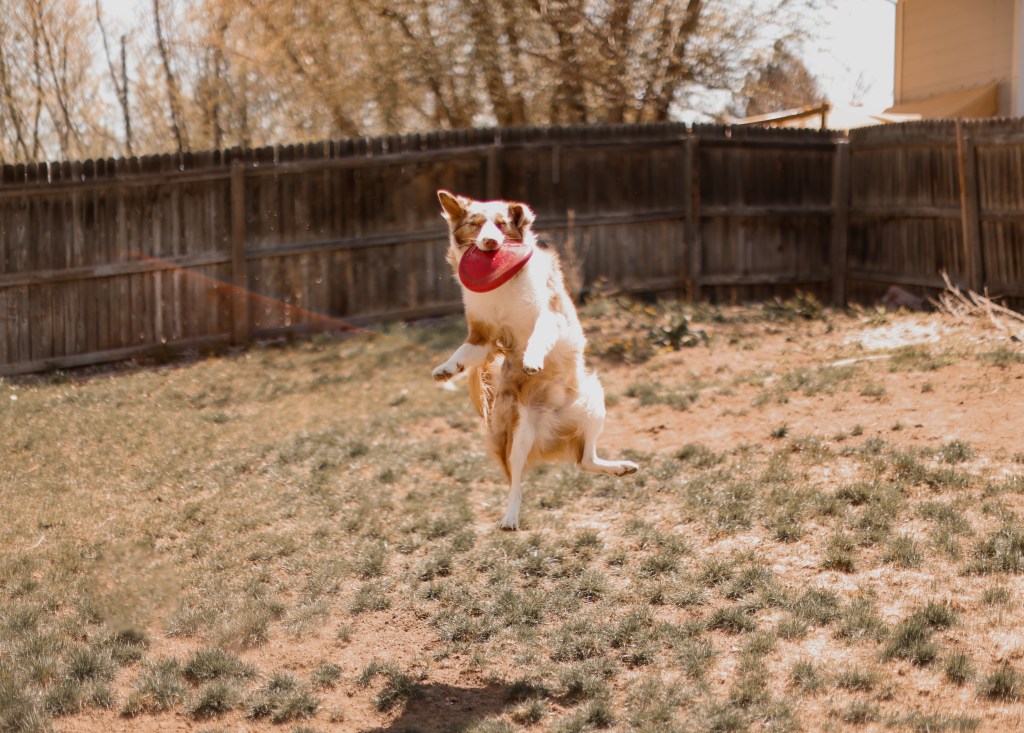
The very first thing Remy ever taught me about photography was how to capture movement. If there’s one thing an Australian Shepherd loves, it’s being absolutely crazy. And I mean running, jumping, spinning, sprinting, all of it. When I first started my photography journey, step one was capturing him in his element. But that was easier said than done. He was always faster than I expected, and my early photos were mostly just blurry streaks of fur. I quickly realized that if I wanted to freeze those moments—the mid-air leaps, the sharp turns, the way his paws barely touched the ground before taking off again—I needed to understand my camera settings.
Through trial and error, I learned to adjust my shutter speed, track his movement, and anticipate his next move before it even happened. A slow shutter made him look like a ghostly blur, but the right balance allowed me to capture every detail, from the wind in his fur to the determination in his eyes. It wasn’t just about freezing motion—it was about telling a story. Looking back, those action shots aren’t just proof of my progress as a photographer; they’re little time capsules of who Remy is—his energy, his joy, his wild spirit. Without him, I never would have pushed myself to refine my action photography the way I have.
Check out 10 of my favorite photos of Remy I’ve ever taken, here!
Learning Patience When Your Subject Won’t Sit Still
The next thing I learned about photography through Remy is how to have patience. There’s a difference between taking a photo and taking the right photo. I can’t tell you how many times I’ve had my camera ready, waiting for Remy to give me that perfect head tilt, sit in just the right patch of golden light, or even just look my way. And sometimes, he does, but most of the time, he has his own plans. He’ll suddenly decide it’s the perfect moment to chase a butterfly, roll in the dirt, or stare off at something far more interesting than me. At first, it was frustrating. I wanted him to pose, to cooperate, to make my vision come to life. But photography, and dogs, don’t work like that.
Through Remy, I’ve learned that the best moments aren’t the ones I try to control; they’re the ones that unfold naturally. The candid glances, the in-between moments, the way his ears perk up when he hears something exciting, those are the shots that mean the most. It’s the same with life. You can’t force the perfect moment, but if you’re patient, if you’re present, it will happen on its own. And more often than not, it’ll be even better than what you had planned.

How to Capture Personality in Pet Photography (Beyond Cute Poses)
One of the biggest photography lessons I’ve learned through taking photos of Remy is how to take a regular old picture to the next level. And that’s through capturing who he is, not just what he is. Every dog has a unique personality, and Remy’s is full of quirks—his zoomies, his dramatic sighs, the way his ears perk up when he hears a certain word (frisbee). Photographing him has taught me that great portraits aren’t just about sharp focus or beautiful lighting—they’re about emotion and personality. The way his paws dangle off the couch when he’s half asleep, the sparkle in his eyes when he’s about to take off running—those little details are what make a photo truly him.
That lesson has carried over to my photography with people, too. It’s not just about capturing someone’s face—it’s about capturing who they are. A forced smile under perfect lighting might look nice, but it won’t feel real. The real magic happens in the unposed moments—the way someone laughs when they think no one’s watching, the way they tuck their hair behind their ear when they’re getting ready for a photo, the way their whole face lights up when they see someone they love. Photographing Remy has made me realize that the best portraits aren’t just about making someone look good. They’re about making someone feel seen.
Why Backgrounds Matter in Pet Photography (And How Dogs Help You See Them)
The next important lesson Remy taught me about photography is that backgrounds matter. Before Remy, I didn’t go on nearly as many spontaneous adventures. But when you have an energetic dog, you don’t really have a choice. And I wouldn’t have it any other way. Because the way his tail wags a little faster when he realizes we’re about to go somewhere new, I know every adventure is worth it. He is so precious. He has no idea that I plan these little trips with photography in mind. As far as he knows, we’re just out exploring, running through fields, hiking up trails, chasing the wind. And in a way, he’s right. Photography might be my excuse to get out there, but he is the reason those moments feel so special.
Remy has made me so much more intentional about my surroundings when I shoot. Every location we explore adds something different to the photos—the depth of a dense forest, the openness of a golden field, the way the mountains frame him just right. I see the world differently because of him. He’s taught me that a great background doesn’t just complement a subject—it tells a story. And he deserves every single trip we take.

Creative Pet Photography Ideas: Themes, Seasons, and Storytelling
The next fun lesson Remy taught me about photography is how to make it a little more fun. I used to think dog photography was simple—just point the camera and take a cute picture. And sure, sometimes it is that simple, but over time, I realized there’s so much more to it. Photographing Remy has shown me that creativity in photography isn’t just about the subject—it’s about how you capture them. I’ve experimented with different themes, colors, and styles for his portraits, just like I do with people. One day, he’s the star of a dramatic black-and-white shot, looking like a serious model. The next, he’s glowing in golden hour light, the warmth of the sun bringing out the red in his fur. And then there are the playful, high-energy shots—the ones where he’s mid-jump, tongue out, fully in his goofy element. I never planned to get so creative with dog photography, but with Remy, it just kind of happened.
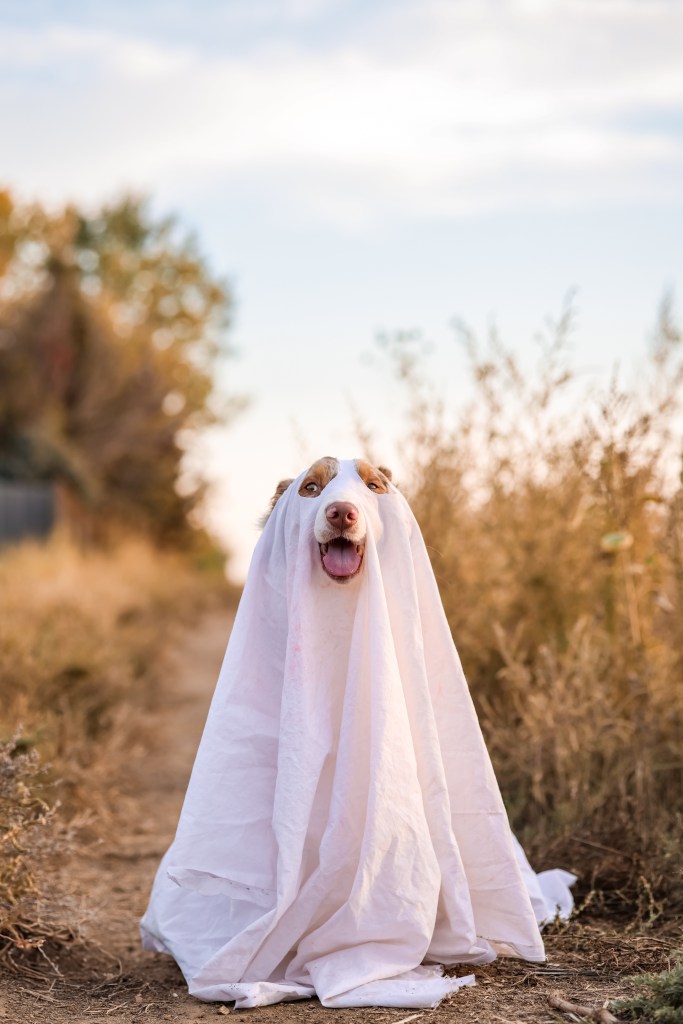
Some of the themes I’ve explored with Remy have been inspired by the changing seasons and holidays, which has made each shoot feel fresh and exciting. One day, we’re embracing the cozy vibes of fall—Remy running through a blanket of colorful leaves, the warm tones of autumn lighting everything up. The next day, it’s Halloween, and I’m dressing him up in a little costume, capturing his playful side as he explores the spooky decor. Then, as the air gets colder, I shift to winter, where I photograph him with the soft white snow as a backdrop, his fur standing out against the peaceful landscape. Each theme adds a new layer to the photos and gives me the opportunity to get creative with how I style and shoot him. Whether it’s the vibrant colors of fall or the chill of winter, every theme brings a new perspective to Remy’s personality—and it’s been such a fun journey discovering all the ways I can express his playful spirit through photography.
How to Photograph Pets in Their Natural Element for Authentic Photos
The most recent, and perhaps the most important, lesson Remy has taught me is how to truly capture someone in their element. This is where the magic happens. It’s one thing to get a photo of Remy on a leash, walking down a sidewalk, obedient and calm—but those photos don’t have the same spark. The real magic comes when I photograph him off-leash, running full force across an open field, charging at a bird he’s trying to herd, or swimming in a lake with a grin on his face that says “this is where I’m meant to be.” In those moments, when he has the freedom to just be himself, he glows. Remy shines brightest in places like the dog park, an open field, or out camping—places where he’s truly in his element, doing what he loves. And when I capture him in those moments, the photos aren’t just pictures; they’re full of life, full of him.
I’ve learned to carry this lesson over to photographing people as well. It’s one thing to get a photo of someone standing in front of a tree, looking nice and posed, but the real beauty comes when you see someone in their true element. Take a mom looking at her daughter on her wedding day with such pride, love, and joy. Or a man who loves playing records— eyes sparkling, showing you his prized collection. The most authentic, raw, and real moments happen when people are doing what they love, what makes them them. That’s when you see the real person, and that’s when you capture something unforgettable.
Beginner Pet Photography Settings I Use (Quick Tips)
Photographing a dog like Remy isn’t about getting the perfect pose — it’s about learning how to react quickly, read your subject, and work with imperfect conditions. If you’re a beginner photographer or looking to sharpen your skills, here’s exactly how I approach photographing my dog in a way that actually helped me grow as a photographer.
Pet Photography Tip #1: Use a Fast Shutter Speed to Freeze Motion
Dogs rarely stop moving, which makes them perfect practice for action photography. To avoid blurry photos when your dog is running, jumping, or chasing a frisbee, set your shutter speed to at least 1/500. If your dog is especially fast, or you’re capturing mid-air action, don’t be afraid to push it even higher.
Pet Photography Tip #2: Choose an Aperture That Matches the Moment
For portraits or calmer moments, I love shooting with a wider aperture (around f/2–f/4) to create a soft background and draw attention to Remy’s eyes. For action shots, I stop down a bit (f/5.6 or higher) to keep more of him in focus while he’s moving.
What is Aperture in Photography?
Outdoor Action Shot Settings (Running, Jumping, Playing)
- Shutter Speed: 1/500 – 1/2500
- Aperture: f/5.6
- ISO: Always start at 100 (cap around 3200 if your camera allows)
- Focus Mode: AI Servo
- Drive Mode: High-speed burst
- Focus Area: Zone AF
This setup helps freeze fast movement while keeping enough of the dog in focus, even when they suddenly change direction.
Calm Moments & Pet Portrait Settings
- Shutter Speed: 1/320 – 1/640
- Aperture: f/1.2 – f/4
- ISO: Lowest available
- Focus Mode: AI Servo
- Drive Mode: Single or low burst
- Focus Point: Eye focus / Spot focus on eyes
This is what I use when Remy slows down, resting, sitting, or just being his cute self. The wider aperture helps blur the background and keep the focus on his eyes.
Mastering Bokeh: How Aperture, Focal Length, and Distance Affect Background Blur
Golden Hour & Low Light Pet Photography Settings
- Shutter Speed: 1/640 (don’t go lower if your pet is moving)
- Aperture: f/2 – f/2.8
- ISO: Adjust as needed (a little noise is better than motion blur)
- Focus Mode: Continuous AF
- White Balance: Auto or Daylight
Low light taught me to prioritize shutter speed above everything else. A slightly noisy photo is always better than a blurry one.
Golden Hour Photography: The Best Settings & Tricks for Perfect Shots
Frequently Asked Questions About Pet Photography
Q: Is photographing pets good practice for beginners?
Yes, pets teach movement, timing, and patience faster than almost any other subject.
Q: What’s the hardest part of pet photography?
Capturing sharp images while the subject is constantly moving.
Q: Can pet photography skills transfer to photographing people?
Absolutely, especially when it comes to capturing emotion and candid moments.
A Reminder of What Matters Most
At the end of the day, Remy doesn’t care about photography. He doesn’t care if the lighting is perfect or if I nailed the composition. All he wants to do is make me happy. And in that, he’s taught me something even bigger than photography—he’s reminded me to slow down, to enjoy the little moments, and to never take the things I love for granted.
So, in a way, every time I take a picture of Remy, I’m capturing more than just a dog—I’m capturing the lessons he’s taught me along the way. And I wouldn’t trade that for anything.
Anyways, thanks for reading <3 Remy also thanks you.
Like this post to send Remy a head pet, comment to send him belly pets ;)
Now, I’d love to hear from you! Do you have a pet that you love? Tell me more about them! Or, do you have a favorite photography subject that helps you build your skills? I’d love to hear your stories in the comments below
My Top 10 Favorite Photos of Remy: Capturing My Best Boy
Check out my pet photography, here!
Read more of my blogs, here!
 KRx Media
8 responses to “How Photographing My Dog Made Me a Better Photographer”
This was super sweet, and super insightful. I remember one time hearing how, if I remember right, Native Americans had learned from the animals to do specific things. You learning from Remy, practicing your photography and him teaching you to improve, reminded me of that tidbit I heard. It’s really fascinating how sometimes your own pet can teach you things in a way that you wouldn’t have expected. You probably would’ve been practicing your photography in different ways had you not had Remy! Maybe practicing and improving in a more traditional way. It’s always amazing when your pets compliment you.
My dad has a dog named Anthony. I remember when he was a bit smaller and would stand up and lay on me whenever I sat on the couch. He’s still around, but poor guy is getting g some Grey whiskers. Still, he gets super excited whenever I go over and jumps on me. He’s a big guy and his nails hurt lol. I only have two pics of him, but he’s the best. Smart motherfucker too lmao. I wish I had the ability to take him places and such, he’s always cooped up in the backyard. Maybe one day!
LikeLike
[…] And if you want to learn more about what my dog Remy has taught me about photography, you can read about it, here! […]
LikeLike
I got emotional and teary eyed reading this. Remy is so precious and you have the most beautiful relationship with him. Anytime I see a photo of Remy it instantly brings a smile to my face. It’s truly fascinating how much we can learn from our furry companions. You both inspire me to go on more adventures with my furry friend.
LikeLike
[…] What My Dog Remy Has Taught Me About Photography […]
LikeLike
[…] What My Dog Remy Has Taught Me About Photography – My 3 year old Australian Shepherd, Remy, constantly reminds me to slow down and enjoy the little moments. Even if he is the fastest thing alive. […]
LikeLike
[…] What My Dog Remy Has Taught Me About Photography […]
LikeLike
[…] What’s your favorite aperture setting? Do you have a go-to technique or a funny fail like mine? Share your stories in the comments below! And if you’re hungry for more tips, check out my other posts here for photography insights and more of my favorite Remy photos, here. […]
LikeLike
[…] And if you want to learn more about what my dog Remy has taught me about photography, you can read about it, here! […]
LikeLike